About Us
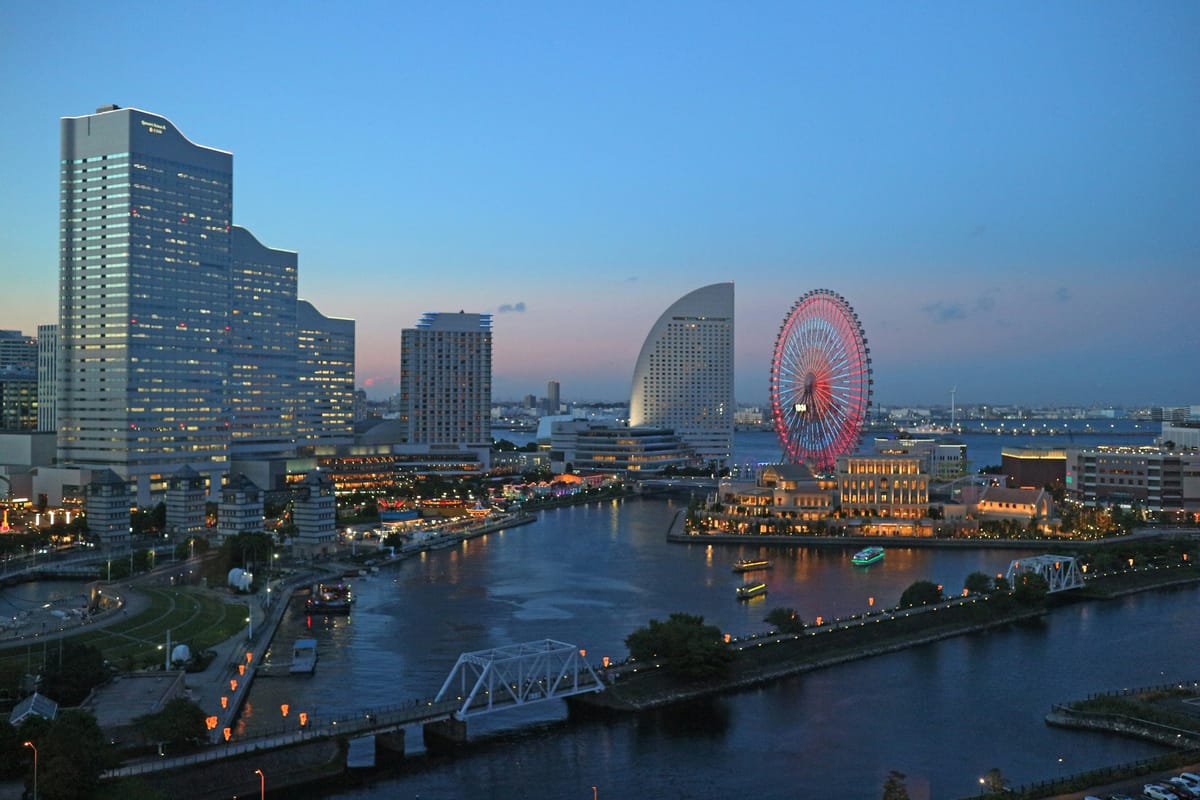
Welcome to the city that works.
Yokohama Bay Watch is not a relocation service or a tourism board. We have no funnels, no urgency, and no "Top 10" lists.
Instead, we focus on observation.
Why Yokohama?
Yokohama sits thirty minutes south of Tokyo. For many considering life in Japan, that fact alone defines it—a commuter city, a bedroom for the capital, a place people pass through.
But look closer, and you find something else: a city that has quietly mastered the art of living.
In most cities, "urban life" and "nature" exist in tension. You work in the city; you escape to nature. Exercise requires planning. Family outings require logistics. The outdoors is something you schedule, not something you stumble into.
Yokohama operates differently. Here, the boundaries blur. The waterfront is not a destination—it is a backyard. Parks are not places you visit—they are places you pass through on your way to somewhere else. The outdoors is not a weekend expedition. It is simply what an ordinary morning looks like.
A City Without Friction
We believe a city should not be measured only by its GDP or train lines, but by something harder to quantify: the friction of everyday existence.
How much effort does it take to be outside? To move your body? To share a meal with your family in the open air? To encounter something unexpected?
In Yokohama, that friction is unusually low. The infrastructure for living—not just commuting, not just working—is built into the city's bones. Nature and urbanity do not compete. They coexist, their edges dissolved into five kilometers of connected waterfront, into parks that double as living rooms, into a harbor that residents actually use.
This is not a city that exhausts. It has stimulation without depletion. Density without claustrophobia.
What We Observe
Through essays on the shoreline, food, family, and the rhythm of ordinary days, we explore a simple question:
What does it look like when a city is designed for life, rather than just production?
We write about morning routines and weekend festivals. About what you can catch from a seawall and what you encounter on a walk. About the way a city reveals itself not through monuments, but through the texture of its everyday.
For Whom?
If you are researching life in Japan—particularly families weighing options in the Tokyo metropolitan area—you have likely encountered the familiar narratives. The efficiency. The safety. The trade-offs.
Yokohama offers a different data point. We are not here to convince you it is the right choice. We are here to show you what we see, slowly and without agenda, so you can decide for yourself.
Read slowly.